
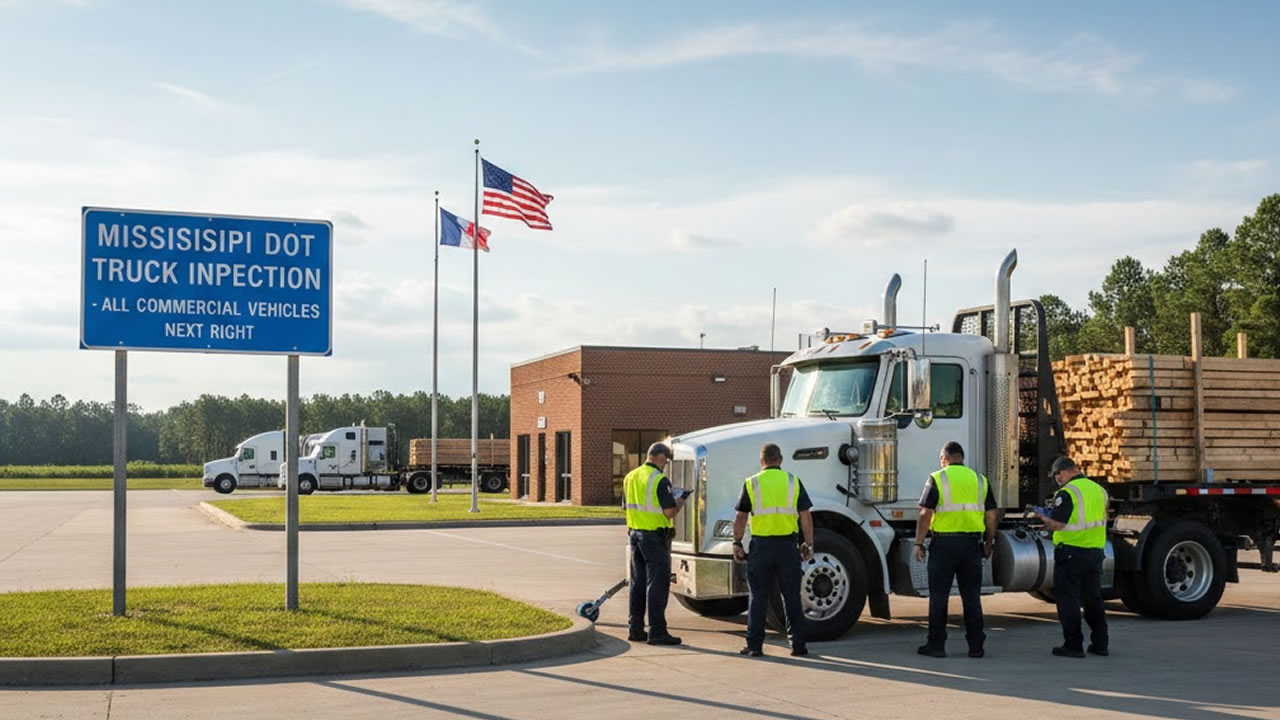
DOT Truck Inspection in Mississippi: Mississippi requires DOT truck inspections to assess commercial motor vehicle operation and compliance with federal and state transportation regulations. The Federal Motor Carrier Safety Administration establishes compliance standards that the Mississippi Department of Transportation and state enforcement officers use to conduct roadside inspections and safety checks. All vehicle types, including semi-trucks and box trucks, must comply with DOT regulations to protect operators from violations and out-of-service orders and financial penalties. Your CSA score and operating authority depend on your regular commercial vehicle inspections.
Pine Belt Fleet Services
5102 US 49, Hattiesburg, MS 39401
+16018222234
Speedco Truck Lube and Tires
740 US-80, Flowood, MS 39232
+16019325707
B&C Truck-N-Trailer Repair-N-Towing
10498 US-80, Meridian, MS 39307
+16014839884
What Is Checked During a DOT Truck Inspection
DOT safety inspections require certified inspectors to assess essential vehicle elements in order to determine both road readiness and compliance with regulatory standards. The assessment includes brake systems and steering mechanisms and suspension and tire and wheel and light and reflector and windshield wiper and mirror and coupling device components. The inspectors conduct a complete driver credential assessment, which includes checking the CDL license and medical certificate and hours of service (HOS) logs and ELD records and proof of insurance. FMCSA regulations require hazardous materials documentation to meet all necessary guidelines when such materials are present. The North American Standard Inspection Program includes these comprehensive roadside inspections, which aim to enhance truck safety on Mississippi highways.
Types of DOT Inspections for Commercial Trucks
Mississippi truck drivers and fleet operators must understand the different DOT inspection levels that exist for their operations. The Level I inspection process entails complete vehicle examination together with driver documentation assessment. Drivers must present their paperwork during Level II inspections while inspectors assess the visible components of the vehicle. The Level III inspection process focuses on assessing the qualifications through driver documentation evaluation. The organization of inspection preparations leads to decreased operational downtime and improved safety management across the fleet.
Why DOT Compliance Matters for Mississippi Trucking Businesses
Trucking companies need to follow DOT truck inspection requirements in Mississippi to protect themselves from fines and delays, which would adversely affect their safety ratings. Your Compliance, Safety, Accountability (CSA) score will suffer from poor inspection results, which will also make audits more likely to happen. Preventive maintenance activities, together with correct recordkeeping and standard pre-trip inspections, enable operations to proceed while organizations remain within regulatory guidelines. The owner-operators and fleet managers should maintain their trucks and drivers’ qualification files to ensure their interstate freight operations run without interruptions.
Preparing for a Successful DOT Truck Inspection
A successful DOT truck inspection requires complete preparation work for all inspection details. A structured vehicle maintenance program together with daily driver vehicle inspection reports (DVIRs) and FMCSA safety standards training for drivers will help organizations achieve significant violations reduction goals. Roadside checks become easier when organizations maintain organized documentation that includes registration documents and IFTA records and insurance certificates. Mississippi trucking companies maintain safe operations through their compliance focus combined with safety audits and continuous fleet monitoring, which enables them to protect their reputation and be ready for inspections at all times.
Disclaimer: The information provided in this blog post is for general informational purposes only. While we strive to keep the content accurate and up to date, we do not guarantee its completeness, reliability, or accuracy. Any actions you take based on this information are strictly at your own risk. We are not responsible for any losses, damages, or inconveniences that may arise from the use of this blog. For professional advice, please consult a qualified expert.