
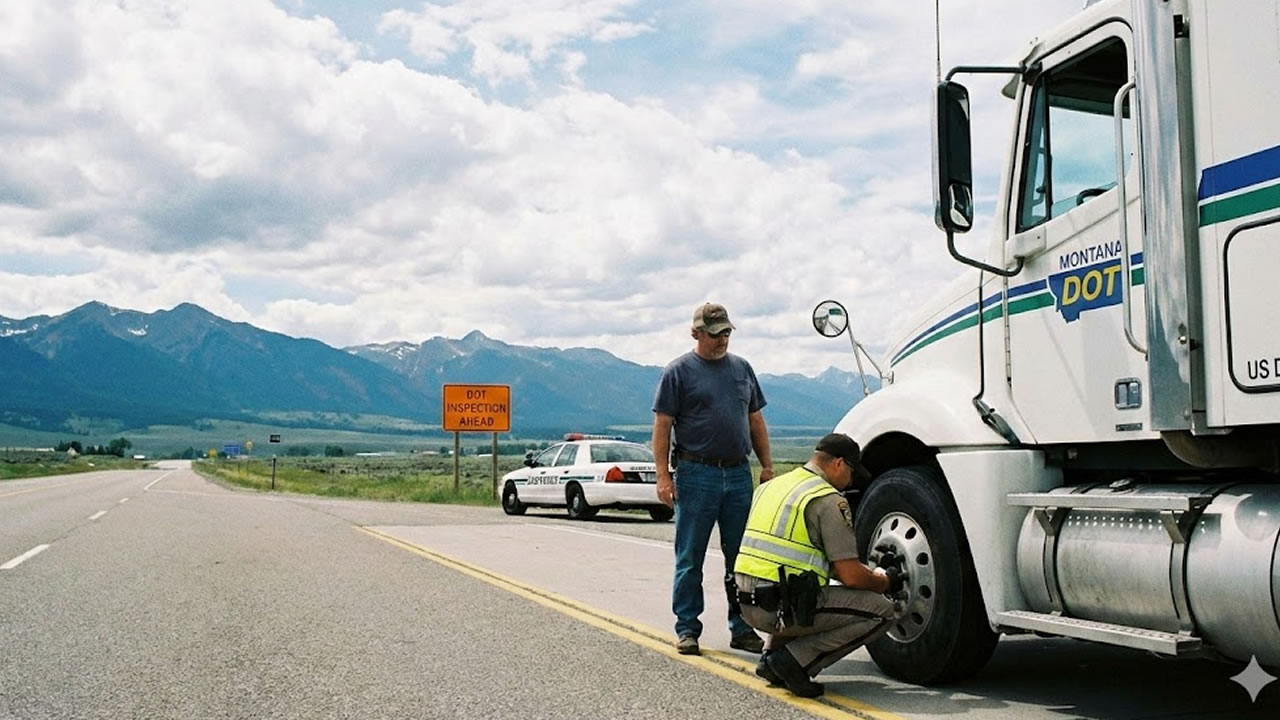
The commercial vehicle operations throughout Montana need to follow both federal and state vehicle regulations to ensure their highway operations remain safe. The Montana DOT truck inspection process checks the safety of commercial motor vehicles according to the Federal Motor Carrier Safety Administration standards, which the Montana Department of Transportation then applies at local sites. Businesses with semi-truck fleets, owner-operators, and logistics companies all need to conduct DOT inspections frequently because these inspections help them avoid violations while their CSA scores decrease, and they prevent expensive out-of-service penalties.
Fleet Truck and RV Repair
1910 Airport Ct, Great Falls, MT 59404
+14067270207
Bacon’s Mobile Truck Repair
46244 Gunbarrel Ln, Elmo, MT 59915
+14062501946
Treasure State Truck & Auto Repair
21 E Legion Ave, Whitehall, MT 59759
+14065339458
What Is Included in a Montana DOT Truck Inspection?
The Montana DOT truck inspection evaluates the essential safety parts that commercial vehicles must have. The inspectors perform their assessment by testing brake systems and tire conditions and suspension systems and steering systems and lighting systems and coupling systems and fuel systems and exhaust systems. Drivers need to show proper documents, which include their valid CDL and medical examiner’s certificate and vehicle registration and insurance and hours-of-service records. The FMCSA compliance assessment includes a review of both electronic logging devices ELDs and maintenance records. The locations for these inspections include weigh stations, roadside checkpoints, and fleet audit sites.
Types of DOT Inspections for Commercial Vehicles
Montana conducts multiple DOT inspection levels, which include various inspection types. Level I inspections examine both driver credentials and vehicle assessment through complete driver review. The Level II inspection process requires drivers to perform walk-around checks of themselves and their vehicles, while the Level III inspection process checks drivers’ documents and their compliance records. Special inspections may also occur for vehicles that transport hazardous materials or take part in safety initiatives. Trucking companies need to understand these inspection levels so they can prepare themselves effectively and reduce their operational downtime.
Why Regular DOT Inspections Matter for Montana Trucking Companies
Montana’s extensive rural highways require trucks to receive proper maintenance because they need to operate reliably under hazardous weather conditions. The implementation of regular DOT truck inspections brings benefits, which include improved road safety and decreased accident likelihood and enhanced fleet operational performance. The business needs to maintain compliance because it protects them from fines and penalties and damage to their safety reputation. Businesses that maintain strong compliance records experience better insurance rates and improved shipping partnerships and uninterrupted transportation operations. DOT standards need to be followed through preventive maintenance, which maintains operational reliability during all seasons.
Preparing Your Fleet for DOT Inspection Success
The Montana DOT truck inspection process needs preparation to complete the inspection without any delays. The organization needs to perform pre-trip and post-trip inspections and keep maintenance logs and train drivers on federal safety regulations. The organization can achieve better compliance tracking through a fleet management system, which enables vehicle performance monitoring and secure digital document storage.
Disclaimer: The information provided in this blog post is for general informational purposes only. While we strive to keep the content accurate and up to date, we do not guarantee its completeness, reliability, or accuracy. Any actions you take based on this information are strictly at your own risk. We are not responsible for any losses, damages, or inconveniences that may arise from the use of this blog. For professional advice, please consult a qualified expert.