
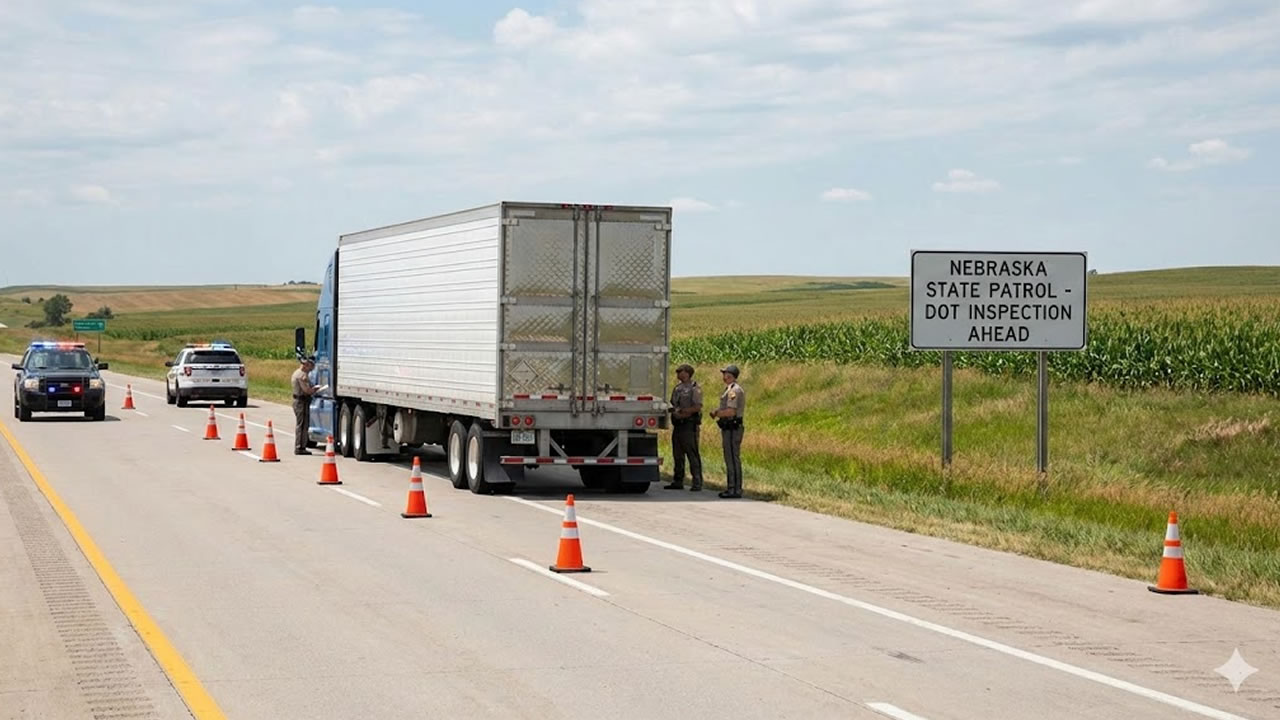
DOT Truck Inspection in Nebraska: The DOT truck inspection program in Nebraska serves as a mandatory requirement for commercial drivers and fleet operators who need to meet federal safety standards. The Federal Motor Carrier Safety Administration (FMCSA) inspects commercial motor vehicles through the Nebraska State Patrol to verify their compliance with established safety requirements. Your business needs to maintain all commercial vehicle laws if you operate semi-trucks, tractor-trailers, and heavy-duty trucks because violations lead to expensive penalties. Nebraska DOT requirements help your trucking business run efficiently while it stays ready for inspections throughout the entire year.
TA Truck Service
8033 Holling Rd W, Alda, NE 68810
+13083185255
Stephenson Truck Repair Inc
4201 Industrial Ave, Lincoln, NE 68504
+14024668532
Boss Truck Shop
7482 Bosselman Ave, Grand Island, NE 68803
+13083817272
What Is Included in a Nebraska DOT Truck Inspection?
Nebraska DOT truck inspection requires officers to conduct a complete assessment of vehicle conditions and driver documentation. The system checks all components, which include brake systems, tires, suspension, steering components, lights, reflective tape, coupling devices, and cargo securement. Inspectors need to examine driver qualification files along with hours-of-service records and electronic logging devices (ELDs) and medical examiner certificates and insurance documents. Regulatory compliance needs demonstration through pre-trip inspections and maintenance records. Fleet operators can decrease fines and enhance their long-term vehicle safety through achieving successful commercial vehicle inspections at roadside checkpoints.
Levels of DOT Inspections and Roadside Checks
Nebraska uses the North American inspection system, which starts with Level I complete inspections and ends with Level III driver-only inspections. The Level I inspection requires the most thorough examination, which uses a 37-step process to evaluate both vehicles and drivers. Nebraska highways and weigh stations use Level II walk-around inspections along with Level V vehicle-only inspections and hazardous materials inspections as standard inspection methods. Carriers need to expect unexpected roadside inspections and compliance checks, which can happen anywhere within major freight corridors. The combination of proper fleet management and preventive maintenance programs functions as the essential requirement for passing these assessments.
Common Violations and How to Avoid Them
The most common violations that occur during Nebraska DOT truck inspections include brake defects, tire tread depth issues, lighting malfunctions, logbook errors, and unsecured loads. The presence of missing documentation together with expired medical cards and incomplete driver vehicle inspection reports (DVIRs) results in citation offenses. The combination of routine maintenance checks with digital compliance tracking and regular driver training reduces the risk of inspection failures. Proactive safety management protects your operating authority while it strengthens your company’s safety rating according to FMCSA regulations.
Preparing Your Fleet for DOT Compliance in Nebraska
A successful DOT truck inspection in Nebraska requires businesses to prepare their operations for inspection day because this process needs complete preparation. The company should create a maintenance schedule that includes conducting internal mock inspections, while all safety equipment needs to meet federal regulations. The organization must maintain up-to-date registration and IFTA credentials and USDOT numbers, which should be visible at all times. The investment in compliance audits and driver safety programs enables the organization to achieve efficient operations between different states. The inspection readiness of your trucks leads to reduced downtime, which enables your company to handle more freight safely throughout Nebraska highways.
Disclaimer: The information provided in this blog post is for general informational purposes only. While we strive to keep the content accurate and up to date, we do not guarantee its completeness, reliability, or accuracy. Any actions you take based on this information are strictly at your own risk. We are not responsible for any losses, damages, or inconveniences that may arise from the use of this blog. For professional advice, please consult a qualified expert.