
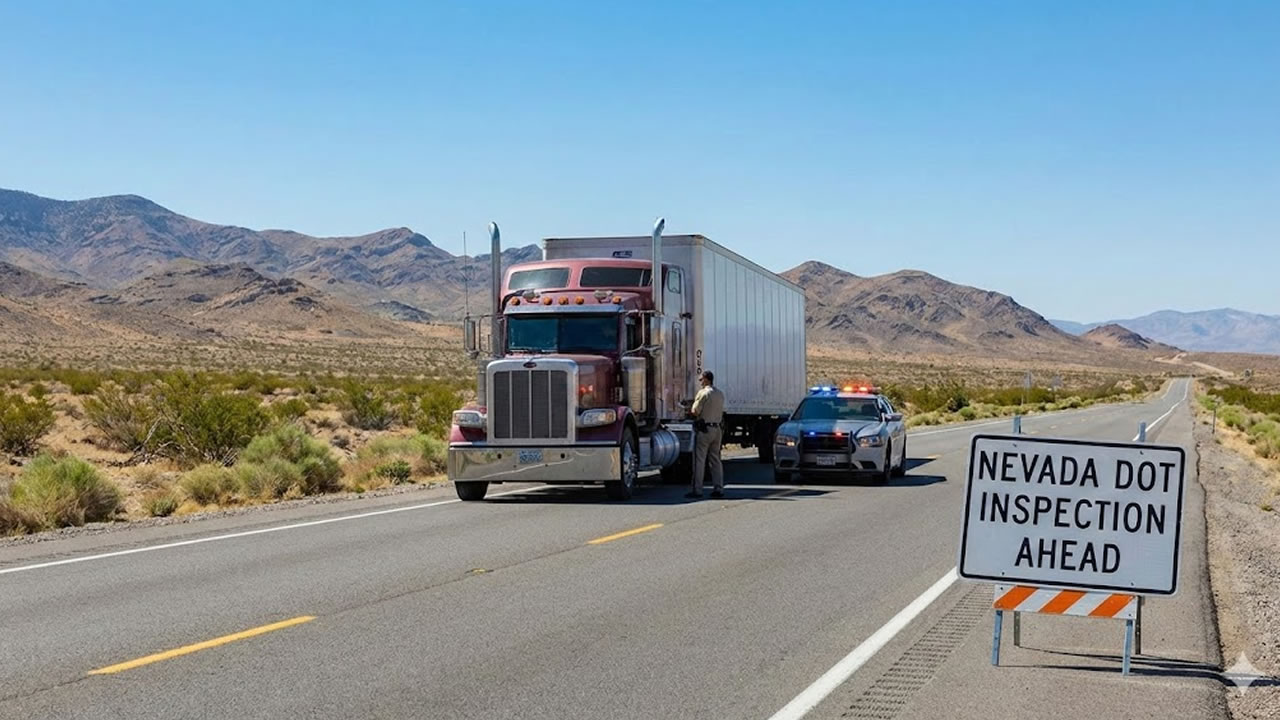
DOT Truck Inspection in Nevada: The Federal Motor Carrier Safety Administration requires all commercial vehicles in Nevada to undergo DOT truck inspections for compliance with their regulations. Federal and state transportation laws require fleet managers and owner-operators to maintain compliance in order to prevent penalties and out-of-service orders, which will result in expensive downtime. Nevada’s commercial vehicle inspection process evaluates vehicle safety requirements together with driver documentation and vehicle maintenance practices. Carriers who operate their vehicles through busy roads in Las Vegas and Reno need to ensure their trucks meet all FMCSA compliance requirements so they can operate their business without interruptions.
Trucks of Nevada
3050 N Commerce St Suite B, North Las Vegas, NV 89030
+17023332463
TA Truck Service
1950 E Greg St, Sparks, NV 89431
+17753552400
LV ROAD TEC ASSISTANCE LLC
9816 Gilespie St Suite E140, Las Vegas, NV 89183
+18885873832
Types of Commercial Vehicle Inspections
The North American Standard Inspection procedures serve as the basis for conducting truck inspections throughout Nevada. The inspection process includes Level I inspections, which evaluate all aspects of driver credentials and vehicle components, while Level II and Level III inspections concentrate on specific areas. Inspection teams check all vehicle components, which include brakes, tires, suspension systems, lighting devices, cargo securement systems, and electronic logging devices. Roadside inspections and weigh station checks will verify driver qualifications through checking CDL validity and medical examiner certificates and drug and alcohol testing compliance and hours-of-service records.
Key Areas Checked During a Nevada DOT Inspection
DOT safety inspections require enforcement officers to assess vital safety systems, which must meet federal motor carrier safety standards. The review process includes an analysis of brake systems, steering mechanisms, coupling devices, exhaust systems, and fuel systems. Inspectors check that load securement processes follow federal cargo securement standards to ensure cargo remains in place during transport. Organizations use accurate vehicle maintenance records together with driver vehicle inspection reports (DVIR) to demonstrate their compliance with regulations. Trucks operating in Nevada need to show their actual USDOT numbers and required company markings, which transportation safety laws establish as mandatory.
Common Violations and How to Avoid Penalties
Nevada DOT truck inspections most frequently encounter brake violations, tire defects, lighting issues, and incomplete driver documentation as common violations. The presence of hours-of-service violations together with missing inspection reports will lead to fines or out-of-service penalties. The implementation of preventive maintenance programs together with regular fleet inspections and pre-trip inspections will minimize compliance risks. The establishment of structured safety management systems with regular internal audits and continuous driver training serves as the main method for fleet managers to achieve complete compliance with FMCSA safety regulations.
Preparing for a DOT Truck Inspection in Nevada
DOT inspection passing requires proper preparation, which prevents any inspection delays. Trucking companies need to create a compliance strategy that includes maintenance schedules and proper documentation organization and driver log monitoring. The combination of electronic logging devices together with maintenance tracking software and safety compliance programs enables operational efficiency while decreasing inspection-related challenges. Nevada commercial carriers who follow safety standards and regulatory requirements will protect their CSA scores and maintain operational efficiency and continuous freight movement across state lines.
Disclaimer: The information provided in this blog post is for general informational purposes only. While we strive to keep the content accurate and up to date, we do not guarantee its completeness, reliability, or accuracy. Any actions you take based on this information are strictly at your own risk. We are not responsible for any losses, damages, or inconveniences that may arise from the use of this blog. For professional advice, please consult a qualified expert.