
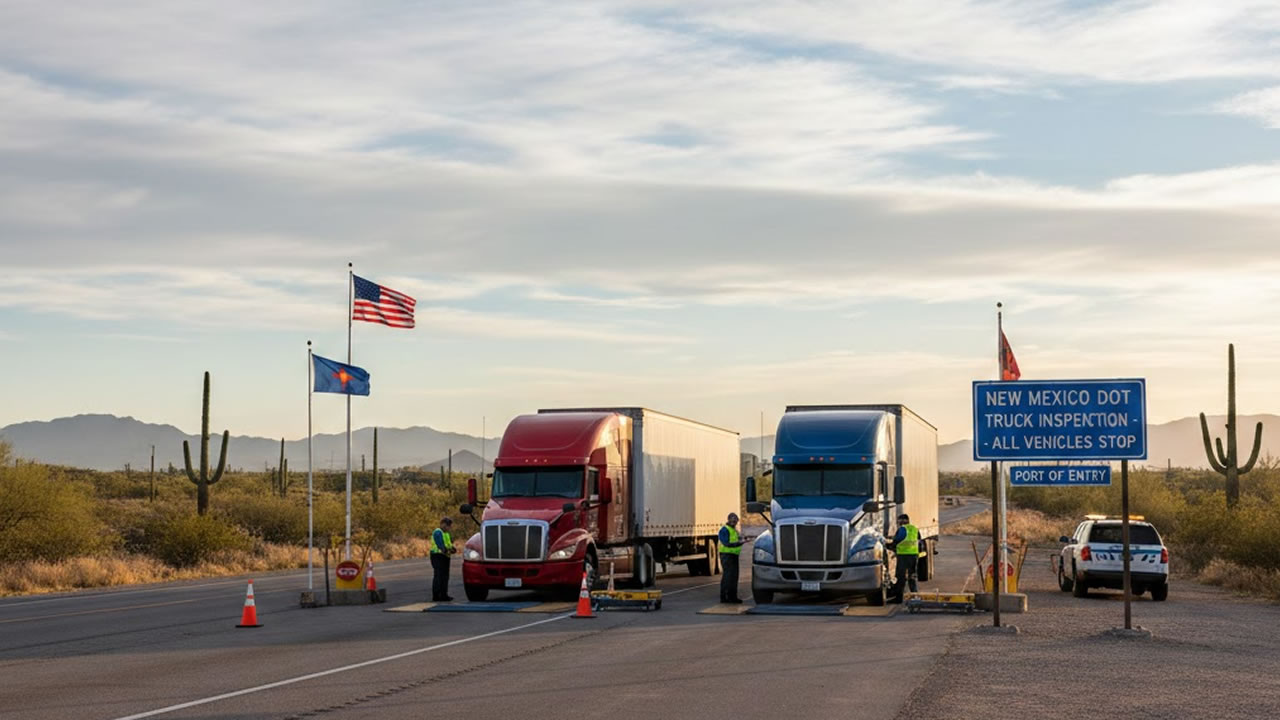
The DOT Truck Inspection in New Mexico functions as both a legal obligation and an essential procedure to maintain your commercial vehicle’s eligibility for state and national road operations. All New Mexico operations and Federal Motor Carrier Safety Administration (FMCSA) freight shipments must follow inspection requirements to prevent expensive out-of-service violations and operational interruptions. All commercial truck drivers and owner-operators and fleet managers must maintain their vehicles in accordance with federal motor carrier safety regulations and the enforcement standards established by their respective states.
On-Site Diesel & Auto Repair
616 Coso Ave SE, Albuquerque, NM 87105
+15054004958
DHILLON ROAD SERVICE and Truck Repair
2405 NM-469, San Jon, NM 88434
+15757080303
Wes’s Truck Repair LLC
401 1/2, 401 W Hermosa Dr, Artesia, NM 88210
+15059011237
Understanding New Mexico DOT Inspection Requirements
The New Mexico Department of Public Safety establishes the DOT truck inspection procedures, which all New Mexico inspections must follow together with FMCSA standards. Inspection points include weigh stations, roadside checkpoints, and compliance review sites.
These inspections cover essential safety components such as
- Air brake functionality and brake systems
- The function of steering systems together with suspension components
- The function of tires together with wheels and rims
- The function of lighting systems together with reflectors
- The function of cargo securement together with load distribution
- All driver documents together with medical certificates and service hour logs
Non-compliance with standards leads to negative impacts on CSA scores and results in fines and vehicle shutdowns, which hinder delivery operations and decrease operational capacity.
Types of DOT Inspections for Commercial Trucks
The enforcement officers in New Mexico execute different inspection levels which they usually follow according to North American Standard Inspection protocols. These include:
- Level I Inspection – Comprehensive vehicle and driver inspection
- Level II Inspection – Walk-around driver/vehicle inspection
- Level III Inspection – Driver-only credentials and documentation review
- Level V Inspection – Vehicle-only inspection
The inspection process assesses safety performance indicators together with maintenance records and electronic logging devices (ELDs) and FMCSA safety regulation compliance. Consistent execution of pre-trip and post-trip inspections enables organizations to achieve major reductions in their violation probability.
Common DOT Violations and How to Avoid Them
The trucking companies operating in New Mexico face ongoing violations because their drivers fail to meet brake adjustment standards and tire tread depth requirements and operate their vehicles with defective lights and fail to secure their cargo properly. The documentation process faces practical challenges because expired medical examiner certificates and incomplete driver qualification files trigger most penalties.
To minimize compliance risks:
- Develop complete preventive maintenance schedules
- Execute ongoing safety inspection activities
- Verify driver hours of service records
- Create accurate vehicle inspection reports (DVIRs)
- Instruct drivers on the procedures to follow during roadside inspections
The process of creating compliance standards becomes essential for businesses because it enables them to protect their safety rating while avoiding operational breakdowns.
Preparing for a DOT Truck Inspection in New Mexico
DOT truck inspection success depends on preparation work, which leads to smooth inspection outcomes. Your commercial motor vehicle must fulfill all mechanical requirements and documentation standards before you begin your New Mexico highway driving and weigh station approach. Your registration documents, insurance documents, USDOT number, and inspection reports should remain accessible at all times.
Fleet operators who invest in routine safety inspections, compliance management systems, and driver training programs experience fewer roadside delays and enforcement actions. The process of keeping your trucks ready for inspection not only permits continual truck operation but also establishes trust with shippers and brokers who emphasize safety performance.
You must achieve full DOT compliance in New Mexico to maintain your commercial vehicle operations while supporting your business growth goals.
Disclaimer: The information provided in this blog post is for general informational purposes only. While we strive to keep the content accurate and up to date, we do not guarantee its completeness, reliability, or accuracy. Any actions you take based on this information are strictly at your own risk. We are not responsible for any losses, damages, or inconveniences that may arise from the use of this blog. For professional advice, please consult a qualified expert.