
The DOT Truck Inspection in New York requires compliance to protect your fleet from operational issues and safety threats while maintaining profitability. The federal and state inspection standards knowledge helps both owner-operators and commercial fleet managers to avoid expensive violations and unplanned operational interruptions and compliance violations. The Federal Motor Carrier Safety Administration, together with state authorities, enforces strict safety regulations on commercial motor vehicles operating in New York. The regular inspections determine if trucks meet safety standards while they keep essential documents and operate legally on all state highways.
Brooklyn Truck Repair
3708 Fort Hamilton Pkwy, Brooklyn, NY 11218
+17183016111
TLC Auto & Truck Repair Center
230 NY-109, Farmingdale, NY 11735
+16314594227
Tri-State Truck & Trailer Repair Inc.
1927 Atlantic Ave, Brooklyn, NY 11233
+17188324911
New York State inspection
40-11 23rd St, Long Island City, NY 11101
+13475278565
Understanding DOT Inspection Requirements in New York
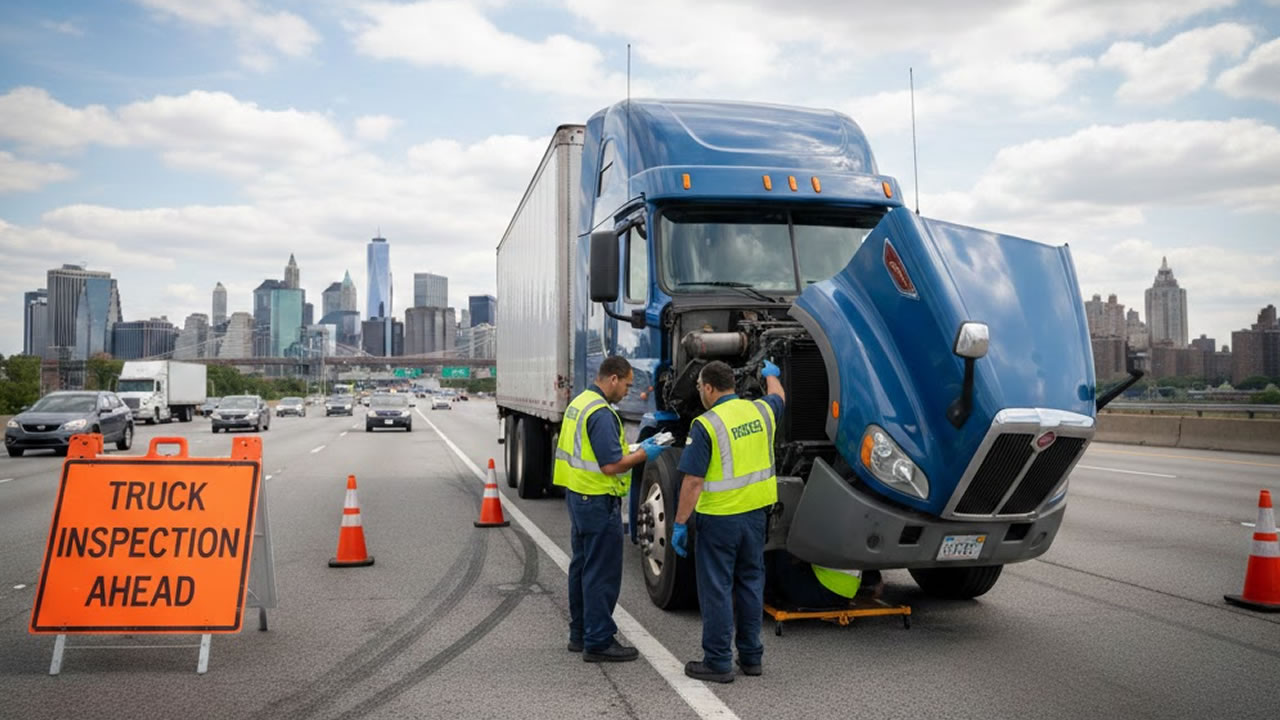
The DOT inspection process in New York operates according to Federal Motor Carrier Safety Administration requirements, which state that inspections must occur with New York State Department of Transportation collaboration. These inspections typically include a review of driver credentials, hours-of-service records, electronic logging devices, vehicle maintenance reports, and overall mechanical condition. Inspectors choose between three inspection levels based on their assessment of the current situation. The authorities monitor trucks that operate on New York interstates and other high-traffic corridors to ensure they comply with federal motor carrier safety regulations.
What Inspectors Check During a DOT Truck Inspection
The authorities who conduct DOT truck inspections examine vital truck components, which include brake systems, suspension systems, steering systems, tire systems, lighting systems, and coupling systems. The inspectors evaluate driver qualification files together with medical certificates and CDL validity and insurance documents. The complete vehicle inspection reports, the annual inspection documentation, and the hazardous materials permits must maintain accurate status and current information. Safety violations, which include defective equipment and logbook discrepancies, result in out-of-service orders and CSA score reductions and possible civil penalties. Proper preventive maintenance programs reduce compliance issues during roadside inspections.
Common Compliance Challenges for Trucking Companies
Trucking businesses face difficulty because they need to keep their documentation organized while they track inspection dates, and their vehicles need to comply with safety standards before they can operate on public roads. The combination of missed annual inspections, the driver vehicle inspection reports that remain incomplete, and the registration paperwork that becomes outdated creates severe operational challenges. The multiple states in which fleets operate create additional difficulties for businesses because they must synchronize New York DOT regulations with their interstate commerce operations. The combination of fleet management systems and digital recordkeeping and regular internal audits reduces enforcement risks while maintaining operational flow
Schedule Your DOT Truck Inspection in New York
The New York DOT truck inspection scheduling system gives your commercial vehicles a proactive way to maintain their compliance with state and federal regulations. The certified inspectors conduct complete safety evaluations, which help to discover mechanical problems before they cause expensive equipment failures. The combination of proper documentation and fleet maintenance and inspection protocol understanding enables you to avoid penalties while protecting your safety rating and ensuring uninterrupted business activities. The compliance system protects your business reputation while it enhances operational efficiency for your company in the competitive trucking market.
Disclaimer: The information provided in this blog post is for general informational purposes only. While we strive to keep the content accurate and up to date, we do not guarantee its completeness, reliability, or accuracy. Any actions you take based on this information are strictly at your own risk. We are not responsible for any losses, damages, or inconveniences that may arise from the use of this blog. For professional advice, please consult a qualified expert.