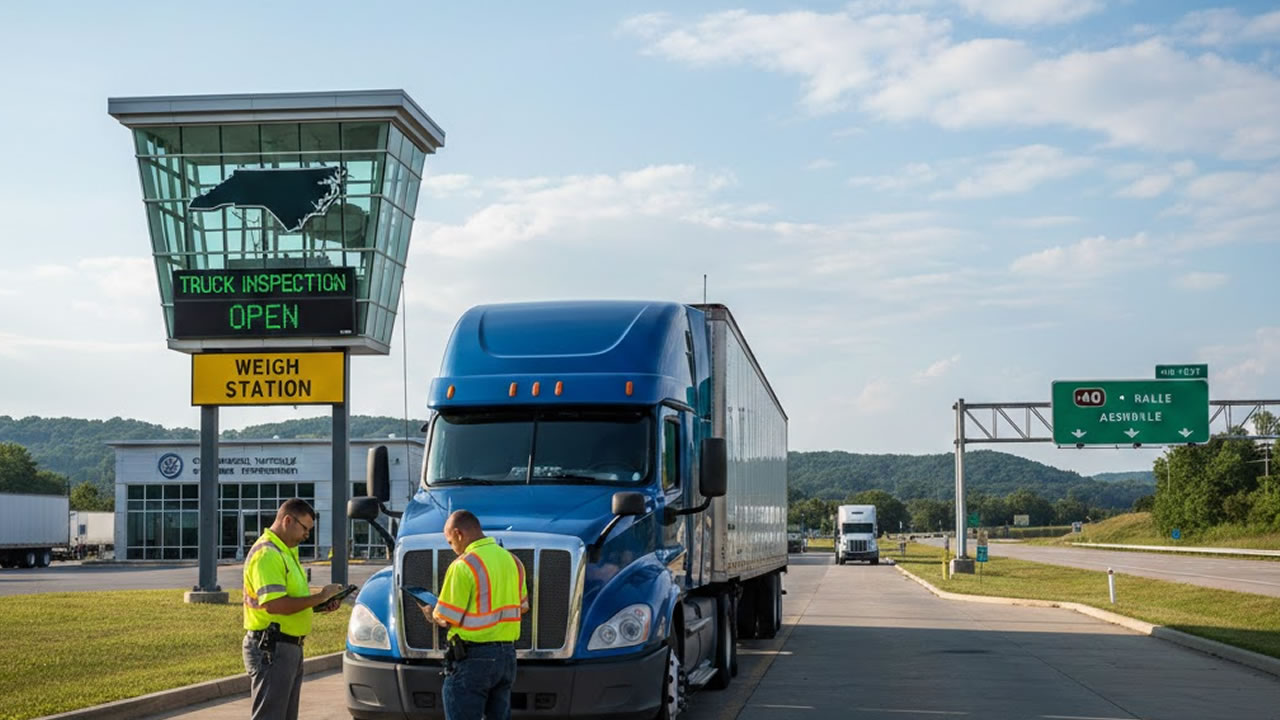
The DOT Truck Inspection in North Carolina enables businesses to maintain legal compliance while they protect their operations from penalties and ensure continuous delivery of their products.
The Department of Transportation truck inspection process in North Carolina functions as a mandatory assessment that protects your commercial driver’s license, your vehicle fleet, and your business’s standing in the community. The inspection rules require commercial vehicle operators to understand the regulations and properly prepare their vehicles for inspections, which helps them avoid expensive fines and operational shutdowns and surprise interruptions.
NC Truck And Diesel
74 Fire Dept Rd, Smithfield, NC 27577
+19199349345
Speedco Truck Lube
940 Jimmie Kerr Rd, Haw River, NC 27258
+13365787950
Tindol Truck Shop
2300 Remount Rd, Gastonia, NC 28054
+19808887726
Wingfoot Truck Care Center
1810 Princeton Kenly Rd, Kenly, NC 27542
+19192840415
What Is a DOT Truck Inspection in North Carolina?
The Department of Transportation truck inspection process exists as a necessary safety assessment that determines whether commercial motor vehicles (CMVs) meet operational and mechanical requirements. The North Carolina Department of Public Safety (NCDPS) and the North Carolina State Highway Patrol perform inspections according to federal FMCSA regulations.
These inspections apply to:
- The inspection process applies to both semi-trucks and tractor-trailers.
- The inspection process applies to both owner-operators and fleet vehicles.
- The inspection process applies to both interstate and intrastate commercial carriers.
- The inspection process applies to vehicles that have a gross vehicle weight rating of more than 10,001 pounds.
- The inspection process applies to hazmat carriers.
The Federal Motor Carrier Safety Administration (FMCSA) establishes compliance requirements that organizations must follow to maintain driver qualification files and hours of service (HOS) records and electronic logging device (ELD) records and vehicle maintenance documentation.
Types of DOT Inspections You May Face
The inspection levels help drivers prepare for unexpected events at roadside checkpoints and weigh station stops.
Level I – North American Standard Inspection
The inspection process represents the most thorough examination procedure, which consists of:
- The inspection process requires verification of driver credentials and medical card.
- The inspection process requires a check of ELD logs and hours of service records.
- The inspection process requires a check of brake systems and tires and suspension and steering components.
- The inspection process requires assessment of lights and coupling devices and frame components.
- The inspection process requires cargo securement systems to meet safety standards.
Level II – Walk-Around Inspection
The inspection process assesses driver documentation, which shows vehicle parts through external examination.
Level III – Driver-Only Inspection
The assessment process verifies CDL validity and HOS compliance and medical certification of drivers.
Level IV–VI – Special and Hazardous Materials Inspections
The inspection process applies to all cases that involve vehicles that have a hazmat endorsement.
Key Compliance Requirements for North Carolina Truckers
The DOT inspection process in North Carolina requires you to keep the following items for a successful inspection:
- The DOT inspection process requires use of an active annual inspection sticker.
- The inspection process requires maintenance of all maintenance records.
- The inspection process requires both a valid CDL and a medical examiner certificate.
- The inspection process requires ELD logs to include all needed verification materials.
- The inspection process requires assessment of tire tread depth and brake performance.
- The inspection process mandates businesses to maintain compliance through proper reflective tape and lighting systems.
- The loading equipment must maintain proper tie-down systems that comply with federal regulations.
The majority of violations occur because drivers make mistakes in their paperwork instead of their mechanical components malfunctioning. Maintaining driver vehicle inspection reports (DVIR) and implementing a proactive fleet safety program will lower your CSA score.
Common Violations That Lead to Out-of-Service Orders
North Carolina truck drivers face violations that involve following activities:
- The presence of defects in brake systems.
- The presence of tire blowouts or worn tread.
- The presence of hours-of-service violations.
- The presence of inoperative lighting systems.
- The presence of load securement problems.
- The presence of expired medical cards.
An out-of-service order creates delivery delays, which raise insurance costs and harm carrier safety evaluations. The company conducts pre-trip inspections and post-trip inspections to protect against expensive operational interruptions.
Where DOT Inspections Happen in North Carolina
The inspection process takes place at two locations, which include:
- The inspection process occurs at weigh stations that operate along major highways, including I-40, I-85, and I-95.
- The inspection process occurs at unannounced roadside safety checkpoints.
- The inspection process occurs at company terminals during fleet audits.
- The inspection process occurs when investigators examine evidence after an accident.
The state of North Carolina takes part in Commercial Vehicle Safety Alliance events by backing all safety enforcement programs that the alliance operates.
How to Prepare for a DOT Truck Inspection
Smart fleet operators treat inspections as routine compliance—not emergencies. The company can achieve inspection readiness through these steps:
- The organization conducts vehicle inspections every day.
- The organization keeps all driver qualification files organized.
- The organization establishes proper electronic logging device usage protocols.
- The organization establishes a schedule for preventive maintenance checks.
- The organization provides drivers with training materials for roadside inspection procedures.
- A well-prepared fleet enables businesses to operate better while spending less time on repairs.
Why Professional DOT Compliance Support Matters
Professional compliance services will help you manage all your paperwork requirements, safety audits, and FMCSA regulations. The company provides audit and record management services, which help customers comply with state and federal trucking regulations while avoiding compliance penalties.
The logging industry in North Carolina requires businesses to maintain inspection readiness at all times because it directly impacts their ability to compete in the market.
Disclaimer: The information provided in this blog post is for general informational purposes only. While we strive to keep the content accurate and up to date, we do not guarantee its completeness, reliability, or accuracy. Any actions you take based on this information are strictly at your own risk. We are not responsible for any losses, damages, or inconveniences that may arise from the use of this blog. For professional advice, please consult a qualified expert.