
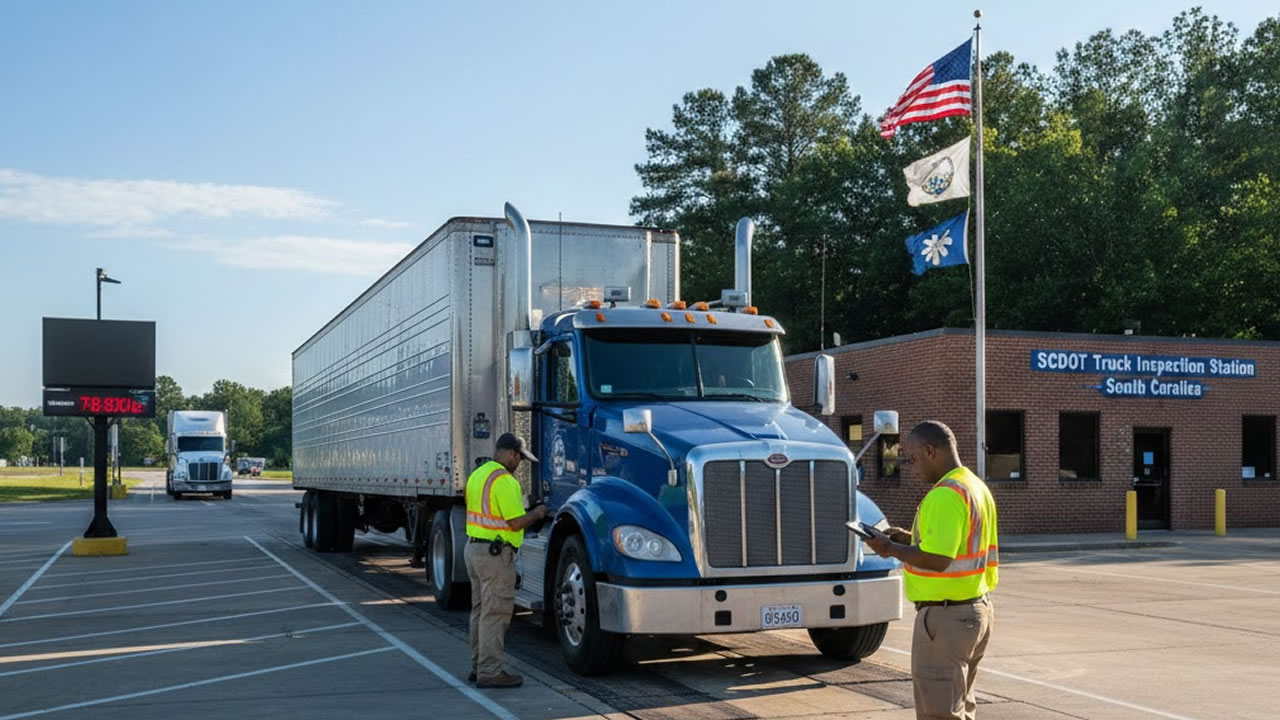
DOT Truck Inspection in South Carolina : The South Carolina DOT Truck Inspection procedure serves as an essential obligation that commercial drivers and fleet operators and owner-operators must fulfill to achieve compliance with both federal and state transportation regulations. Federal Motor Carrier Safety Administration (FMCSA) regulations control the inspection process that the South Carolina Department of Public Safety implements to verify that commercial motor vehicles meet safety requirements throughout their operational lifespan. The documentation requirements together with safety inspection requirements for semi-truck and box truck and bus operations work to minimize operational hazards, which result from violations and penalties and equipment failures.
Southeast Fleet Services
3010 Lancaster Hwy, Richburg, SC 29729
+17046330311
Truck Service of Florence
1811 Trade St, Florence, SC 29501
+18436674601
Southeastern Fleet Services & Mobile Truck Repair
2150 Iron Rod Ct Suite 100, North Charleston, SC 29406
+18434003051
What Is Included in a DOT Truck Inspection?
A DOT truck inspection in South Carolina typically involves a comprehensive safety review covering brakes, tires, suspension systems, steering components, lights, reflectors, coupling devices, fuel systems, and emergency equipment. The inspectors need to check the commercial driver’s license (CDL) along with the medical certificate and hours-of-service records and vehicle registration. The dual purpose of roadside inspections, together with annual DOT inspections, exists to find mechanical faults and out-of-service statuses and compliance deficiencies, which can create dangers for highway users.
Types of DOT Inspections for Commercial Vehicles
Commercial vehicles may undergo Level I, Level II, or Level III inspections depending on the situation. A Level I inspection requires checking both driver credentials and all vehicle mechanical components. The Level II inspection requires the driver and vehicle to walk around, while the Level III inspection verifies driver documents and checks compliance with regulations. Trucking companies in South Carolina need to understand inspection levels because this knowledge enables them to prepare for upcoming inspections while they operate electronic logging devices (ELDs) and perform their scheduled preventive maintenance tasks.
Why Regular DOT Inspections Matter for Trucking Businesses
The performance of trucking fleets increases through regular DOT inspections, which also decrease their chances of receiving CSA violations. Your Safety Measurement System (SMS) rating takes a hit from poor inspection results, which then leads to higher insurance costs and audit triggers. The combination of proactive maintenance and pre-trip inspections together with accurate recordkeeping enables businesses to evade fines and preserve their vehicle health status while maintaining their work effectiveness. Compliance with regulations serves as an essential requirement for owner-operators and logistics firms, which directly impacts their profit margins and business reputation.
How to Prepare for a DOT Truck Inspection in South Carolina
Preparation begins with consistent vehicle maintenance, organized documentation, and driver training. The team needs to perform daily pre-trip and post-trip inspections, which will lead to immediate repair work and creation of detailed inspection reports. The brake systems and tires and lighting must meet FMCSA standards, while all permits and credentials need to be checked for current status. The process of compliance becomes more efficient when you choose to work with a certified inspection service in South Carolina because they will help your commercial vehicle achieve inspection success, which protects your business operations from interruptions.
Disclaimer: The information provided in this blog post is for general informational purposes only. While we strive to keep the content accurate and up to date, we do not guarantee its completeness, reliability, or accuracy. Any actions you take based on this information are strictly at your own risk. We are not responsible for any losses, damages, or inconveniences that may arise from the use of this blog. For professional advice, please consult a qualified expert.