
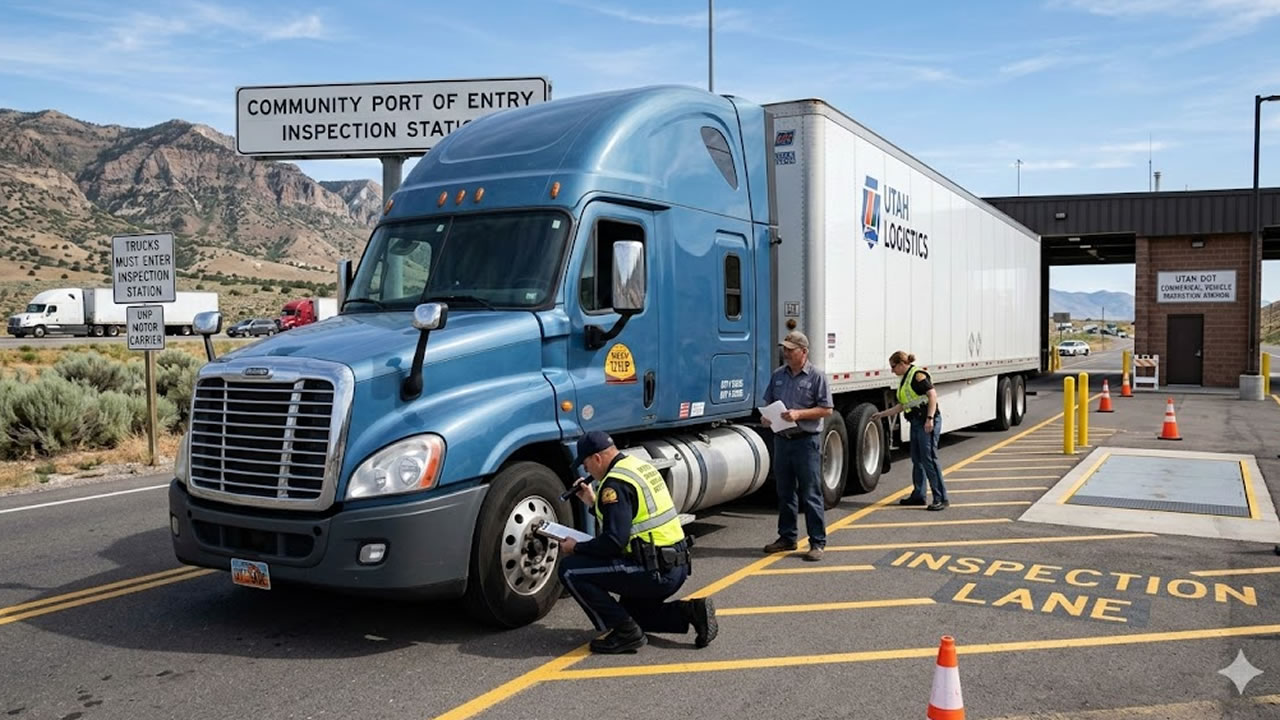
Every commercial driver and fleet owner in Utah needs to follow federal and state safety regulations to maintain their required compliance. The DOT truck inspection process in Utah tests commercial motor vehicles to ensure they meet Federal Motor Carrier Safety Administration and Utah Department of Transportation standards. The implementation of regular safety inspections enables your business to safeguard its drivers and cargo while operating between Salt Lake City and other states, which helps to minimize violation risks and avoid expensive penalties.
Fleet Services of Utah
1548 W 200 S, Lindon, UT 84042
+18017859550
Commercial Trucks Sales & Service
2466 S 2570 W, West Valley City, UT 84119
+18019745252
TMF Truck & Trailer Repair
3550 Harvey Milk Blvd, Salt Lake City, UT 84104
+18013643155
Precision Truck And Trailer Repair Inc
1220 Pioneer Rd, Salt Lake City, UT 84104
+18019770891
Always There Truck and Trailer Repair
1520 Industrial Rd, Salt Lake City, UT 84104
+18016418522
What Is a DOT Truck Inspection?
The Department of Transportation inspection examines commercial vehicles through a complete safety assessment that confirms that they fulfill the requirements of federal motor carrier safety regulations. Certified inspectors evaluate critical components such as brakes, tires, steering systems, suspension, lighting devices, coupling devices, and emergency equipment.
Drivers need to demonstrate their valid CDL licenses together with their medical examiner certificates and their hours of service (HOS) records and their electronic logging device (ELD) compliance and their vehicle maintenance documentation. The combination of roadside inspections and scheduled maintenance checks enables Utah to monitor truck operations for compliance with its rigorous safety performance standards.
Types of DOT Inspections in Utah
The DOT inspection process in Utah categorizes commercial trucks into three distinct inspection levels:
Level I—North American Standard Inspection: A complete 37-step inspection which assesses both driver credentials and vehicle components.
Level II—Walk-Around Inspection: The process examines driver documents and all safety equipment, which can be seen from outside the vehicle.
Level III—Driver-Only Inspection: The procedure verifies driver qualifications while reviewing their HOS logs and necessary documents.
Level V—Vehicle-Only Inspection: The procedure occurs without the driver present during fleet audits or compliance evaluations.
The different inspection levels provide essential knowledge which enables fleet managers to organize their needs for roadside safety audits and weigh station inspections and compliance reviews across Utah highways.
Key Areas Checked During a Utah DOT Inspection
DOT truck inspectors in Utah conduct inspections which include a thorough examination of brake systems and air brake components and tire tread depth and inflation pressure and steering mechanisms and suspension systems and fuel systems and exhaust systems and lights and reflectors and turn signals and cargo securement and load distribution and emergency equipment such as fire extinguishers and warning triangles. Proactive fleet maintenance activities help organizations achieve better safety ratings while reducing their insurance costs.
Why DOT Compliance Matters for Utah Trucking Companies
DOT inspection failures lead to a series of consequences which include fines and vehicle out-of-service orders and increased CSA scores and business interruptions. Compliance protects companies from penalties while establishing trust with shippers and brokers and logistics partners.
The Utah trucking companies which prioritize regulatory compliance experience multiple advantages which include smoother roadside inspections and reduced downtime and improved driver safety and enhanced operational efficiency. The trucking industry requires businesses to succeed by maintaining accurate maintenance records and training drivers on safety procedures and conducting internal audits.
How to Prepare for a DOT Truck Inspection in Utah
Successful passing of commercial vehicle inspections requires all inspectors to complete their inspection preparation work. Fleet operators should:
Schedule regular preventive maintenance checks
Maintain organized driver qualification files
Ensure ELD systems are functioning properly
Perform daily driver vehicle inspection reports (DVIR)
Address minor mechanical issues before they escalate
Truck companies in Utah can maintain their readiness for inspections at all times through the implementation of a safety management plan and the following of FMCSA guidelines. Your compliance investment today will protect your fleet and your drivers and ensure smooth truck operations on Utah highways.
Disclaimer: The information provided in this blog post is for general informational purposes only. While we strive to keep the content accurate and up to date, we do not guarantee its completeness, reliability, or accuracy. Any actions you take based on this information are strictly at your own risk. We are not responsible for any losses, damages, or inconveniences that may arise from the use of this blog. For professional advice, please consult a qualified expert.