
If you run commercial trucks and want a dashcam that coaches drivers while they’re on the road, you’re looking at a system that pairs a road camera with a driver-facing camera and runs AI on the device itself. When it spots something risky, it speaks up inside the cab right away, before a near-miss becomes a crash. Samsara (CM32), Netradyne (Driver•i), and Motive AI Dashcam are the names most fleets start with. Tying this kind of video telematics into your operation can help your CSA scores, shorten the time it takes to clear a disputed claim, and bring down insurance costs on long-haul routes.
What Sets These Systems Apart?
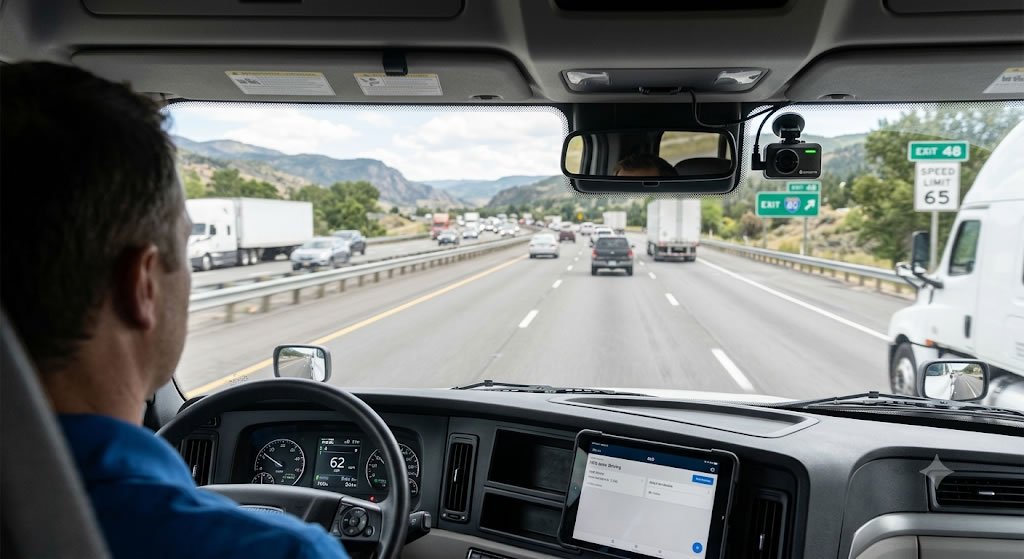
A dual-facing AI dashcam has one lens pointed at the road and one pointed at the driver. Older dashcams just save footage to an SD card and leave you to dig through it after something goes wrong. The AI versions analyze what they see as it happens, picking up on road hazards and risky behavior in the cab at the same time.
Here’s what you’ll typically get:
- Two HD cameras. You see what happened on the highway and what was going on inside the cab.
- Onboard processing. Events are caught on the device, so nothing has to wait on a cloud upload.
- Spoken alerts. The driver hears a warning about tailgating, phone use, seatbelt status, or fatigue.
- Automatic syncing. Serious incidents are sent to your fleet dashboard over 4G/LTE.
How Does In-Cab Coaching Actually Work?
The camera notices when a driver is distracted or doing something unsafe, then says so out loud so they can fix it in the moment. Nobody has to wait for a weekly safety meeting to hear about it.
Here’s the sequence:
- Watching the driver. The inward camera tracks facial cues, eye movement, and hand position to catch drowsiness or phone use.
- Watching the road. The outward camera reads lane markings, traffic speed, following distance, and signals.
- Speaking up. If the driver glances away or follows too closely, a voice prompt tells them to refocus.
- Sorting the results. Minor events resolve themselves without a manager getting involved, and good driving earns rewards.
How the Main Options Compare
The right pick depends on your fleet size, your safety goals, and what software you already use.
| Samsara CM32 | Netradyne Driver•i | Motive AI Dashcam | LivePin SmartDrive Duo | |
| Main strength | Full fleet ecosystem and telematics | Vision-based analysis and positive coaching | Automated safety workflows and fleet performance | Dual-channel ADAS and driver monitoring |
| Real-time voice coaching | Yes (In-Cab Nudges™) | Yes | Yes | Yes (fatigue and collision alerts) |
| Distraction and fatigue detection | Yes, 17+ fatigue indicators | Yes (phone, drowsiness, seatbelt) | Yes (phone, drowsiness, seatbelt) | Yes (driver monitoring) |
| Video quality | 1440p front, HD inward | 1080p HD multi-stream | HD | Dual 1080p HD |
| Good fit for | Enterprise fleets needing ELD integration | Reducing high risk and keeping drivers | Mid-size to large long-haul fleets | Tighter budgets |
Why Put Them in Your Trucks?
These cameras protect carriers from huge jury verdicts, false claims, and avoidable repair bills.
- Clearing your driver. Clear video can show your driver wasn’t at fault.
- Cheaper insurance. Insurers often give discounts to fleets that actively monitor safety.
- Fewer crashes. Distracted driving and near-misses get caught before anyone gets hurt.
- Happier drivers. Scoring that rewards steady, safe driving gives good drivers a reason to stay.
Common Questions
Do these cameras record audio and video inside the cab all the time?
They do record the cab, but administrators can mute cabin audio or limit inward video so it’s only captured when a safety alert or event triggers it.
Does coaching still work at night?
Yes. Fleet-grade inward cameras use infrared sensors, so they can follow eye movement and facial cues even in total darkness.
How do AI dashcams bring down insurance costs?
They give you solid video proof when a claim comes up, and they help cut collision rates by warning drivers about risk as it develops.